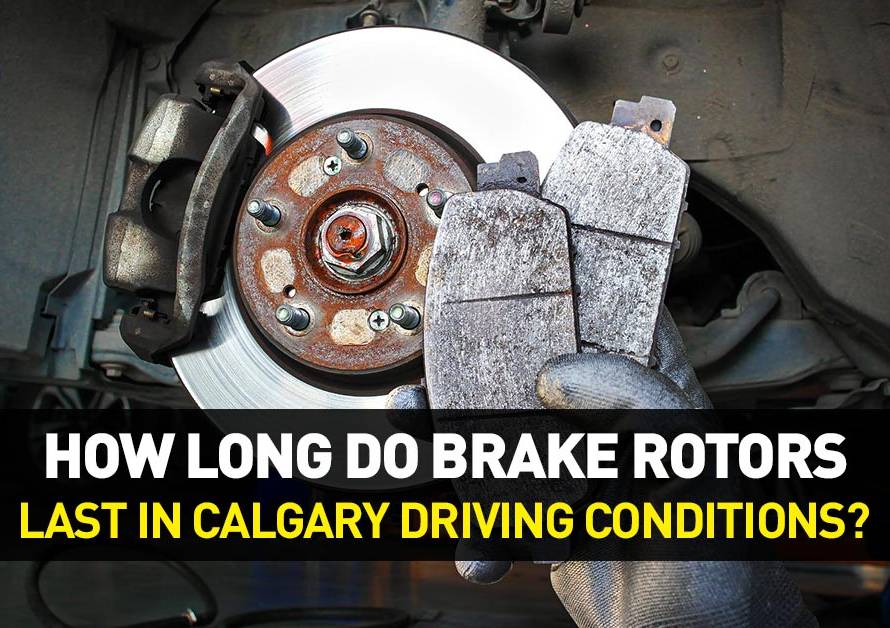
How long do brake pads last? It’s one of the most common questions Calgary drivers ask – and it deserves a straight, detailed answer. The honest truth is that brake pad lifespan varies enormously. Most brake pads last anywhere from 30,000 km to 100,000 km, but that wide range depends on factors that are specific to how you drive, what you drive, and where you drive in Calgary.
Understanding this upfront prevents two expensive mistakes. The first is replacing pads too early, when they still have useful life remaining. The second is leaving them on too long, when worn pads quietly destroy your rotors and dramatically inflate your repair bill.
This guide goes deeper than a simple number. It explains the real mechanics behind brake pad wear, the specific way Calgary’s roads and climate accelerate it, and the practical habits that help your pads reach the upper end of their lifespan rather than the lower end.
How Brake Pads Actually Wear Down – The Science Behind It
Before answering how long brake pads last, it helps to understand why they wear at all. When you press the brake pedal, hydraulic pressure pushes the caliper to squeeze two brake pads against either side of a spinning metal disc called a rotor. The friction between the pad and rotor converts your vehicle’s forward momentum into heat energy, slowing and eventually stopping the car.
Every single brake application removes a microscopic layer of friction material from the pad surface. Over tens of thousands of applications – every red light, every stop sign, every highway exit, every moment of slowing down in rush-hour traffic – that material gradually thins until the pad can no longer function safely.
Therefore, the total number of brake applications your vehicle makes matters far more than simple mileage or time. A vehicle making 40 stops per day wears brake pads at a completely different rate than one making 8 stops per day, even if both vehicles travel the same total distance.
How Long Do Brake Pads Last in Kilometres? A Realistic Range for Calgary Drivers
In general terms, brake pads last between 30,000 km and 100,000 km. However, that range is almost too broad to be useful without context. A more accurate picture comes from understanding the specific driving profile involved.
For urban Calgary drivers who spend most of their time on Crowchild Trail, Macleod Trail, or Deerfoot Trail during morning and afternoon rush hours – stopping frequently, accelerating, then stopping again – a realistic expectation sits between 30,000 km and 50,000 km per set of pads. Stop-and-go driving generates far more brake applications per kilometre than open highway travel.
For Calgary commuters who primarily drive on Ring Road or the highway sections connecting suburbs to the city centre, with fewer full stops and more consistent cruising speeds, brake pads can last 60,000 km to 80,000 km or even longer under the right conditions.
Drivers who combine both types of driving – which describes most Calgary households – typically see pad life in the 40,000 km to 65,000 km range.
Also, note that brake pad manufacturers give ratings under ideal laboratory conditions. Real-world Calgary driving, with its cold starts, salted roads, and weather extremes, consistently produces results below those rated maximums.
Front Brake Pads vs. Rear Brake Pads – Why They Wear at Different Rates
This is one of the most misunderstood aspects of brake pad lifespan. Front and rear brake pads do not wear at the same rate, and planning for both sets identically leads to overspending on one and under-maintaining the other.
When you brake, your vehicle’s weight shifts forward. Physics transfers the majority of the stopping force to the front wheels. Front brake pads handle approximately 60 to 70 percent of total braking work on most passenger vehicles. As a result, they wear down significantly faster than the rear pads.
In practical terms, most Calgary drivers will replace their front brake pads one and a half to two times before their rear pads need attention. A driver whose front pads last 45,000 km might find their rear pads still have serviceable life at 80,000 km or beyond.
This is also why a complete brake inspection – checking all four corners individually – gives a much more accurate picture than a general estimate based on overall mileage alone.
Also Read : How Often Should You Replace Brake Pads?
How Long Do Brake Pads Last in Years? What Time Tells You
Kilometres are a more reliable measure of brake pad life than calendar years, because a vehicle sitting parked for months wears no pads at all. However, time still matters – even for low-mileage vehicles.
Brake pad friction material can harden, crack, or delaminate over time due to moisture exposure, temperature cycling, and the natural aging of the binding compounds used in pad construction. A vehicle driven only 12,000 km per year might have brake pads that are physically thin enough to last several more years by mileage standards – but the material itself may have degraded.
Most mechanics and manufacturers suggest that brake pads should be inspected at least once per year regardless of mileage. In Calgary specifically, where vehicles sit exposed to prolonged freeze-thaw cycling, road salt, and humidity fluctuations, annual inspection makes practical sense.
Additionally, Calgary drivers who store seasonal vehicles – classic cars, recreational vehicles, or a second family vehicle parked through winter – should have brake pads and rotors inspected after extended storage periods. Moisture causes surface rust to form on rotors, and that rust transfers to the pad surface and can accelerate uneven wear during the first weeks back in use.
In general, brake pads older than five to seven years should be evaluated even if mileage suggests they’re within range, because material degradation rather than friction wear may be the limiting factor.
How Long Do Brake Pads Last on an Automatic vs. A Manual Transmission?
This is a question that most Calgary drivers driving an automatic vehicle have never considered – but the difference in brake pad lifespan between transmission types is meaningful and worth understanding.
Why Automatic Transmission Vehicles Use Brakes More
In an automatic transmission vehicle, the transmission primarily manages gear changes without driver input. When you lift your foot from the accelerator, the vehicle coasts rather than using the drivetrain to assist with deceleration. All of the speed reduction responsibility therefore falls on the brake pads when slowing for stops or speed changes.
The result is that automatic transmission drivers typically apply their brakes more frequently and rely on them more completely than their manual-driving counterparts. This produces measurably faster brake pad wear over equivalent driving distances.
Most sources estimate that brake pads on automatic transmission vehicles wear out 10 to 20 percent faster than on manual transmission vehicles driving the same routes. For a Calgary commuter driving in stop-and-go conditions on Deerfoot Trail, that difference could represent 5,000 to 10,000 fewer kilometres per set of brake pads.
How Manual Drivers Can Use Engine Braking to Protect Brake Pads
Drivers of manual transmission vehicles have a distinct advantage when it comes to brake pad longevity – engine braking. Engine braking is the technique of downshifting through gears to slow the vehicle using the natural resistance of the engine, rather than applying the friction brakes at all.
When a manual driver downshifts from fourth to third gear approaching a Calgary intersection, the engine compression absorbs some of the vehicle’s forward momentum. This reduces how hard and how often the brake pads need to work. Over tens of thousands of kilometres, this technique meaningfully extends pad life.
It is worth noting that some automatic vehicles offer manual gear selection modes, paddle shifters, or dedicated engine braking assist features. Calgary drivers with these options can take partial advantage of the same technique. However, attempting aggressive engine braking in a standard automatic transmission – by forcing the gear selector into low – can damage the transmission and should be avoided without understanding the specific system in your vehicle.
Driving Habits That Dramatically Shorten Brake Pad Life in Calgary
The largest variable in how long brake pads last is not the pad itself or the vehicle – it is the driver behind the wheel. Certain driving habits systematically destroy brake pads well ahead of their design lifespan.
Two-Footed Driving and Riding the Brakes
Two-footed driving means using the left foot on the brake pedal and the right foot on the accelerator, a habit some drivers develop in automatic transmission vehicles. The problem is that the left foot often rests lightly on the brake pedal while driving, applying a tiny but continuous amount of pressure.
Even gentle, barely perceptible brake contact while the vehicle is in motion creates constant friction against the rotor. This steady low-level engagement generates heat and wears the pad surface continuously – even though the driver may never feel it happening. Over months of regular driving, this habit can cut brake pad life nearly in half compared to single-foot driving.
The fix is straightforward. Use only your right foot to operate both the accelerator and the brake. This ensures the brake pedal has zero contact unless you are actively and deliberately slowing the vehicle.
Tailgating and Late Hard Stops
Following too closely behind the vehicle ahead is both dangerous and expensive for your brake pads. When a driver tailgates, they must react late to changes in the traffic ahead. Late reactions produce hard, abrupt brake applications from higher speeds – the worst possible condition for brake pad wear.
A hard stop from 80 km/h generates dramatically more heat in the brake pads than a gradual deceleration from the same speed beginning 150 metres earlier. That heat accelerates pad material breakdown and, over time, can warp the rotors the pads press against.
Calgary’s Deerfoot Trail and major arterial roads routinely see this pattern during morning commutes. Maintaining a proper following distance – typically three seconds or more between your vehicle and the one ahead – allows for smooth, early deceleration that spares the brake pads significant stress.
Towing, Hauling, and Carrying Heavy Loads
Physics determines how hard your brakes must work. A heavier vehicle requires more stopping force for every application of the brake pedal. Brake pads on a pickup truck loaded with construction materials work dramatically harder than the same truck running empty.
Calgary drivers who regularly tow trailers, haul cargo, or carry rooftop cargo should account for this in their brake inspection schedule. A vehicle used for regular heavy hauling may need brake pad inspection at 20,000 to 25,000 km rather than at the standard interval. The pads absorb the same total energy regardless of how quickly the kilometres accumulate.
How Calgary’s Specific Road Network Affects How Long Brake Pads Last
General brake pad lifespan guides are written for average North American conditions. Calgary’s specific environment creates additional wear factors that most generic guides don’t fully address.
Also Read: How Much Does Brake Pad Replacement Cost in Calgary?
Corrosion from Road Salt – A Calgary-Specific Brake Killer
Calgary uses significant volumes of road salt and sand during winter months to manage icy road conditions. While this keeps roads safer, it accelerates corrosion of brake components in ways that directly shorten pad life.
Road salt splashes onto the rotor surface and the pad backing plate. Salt moisture accelerates rust formation on the rotor. When surface rust forms on a rotor that sits overnight or over a weekend, the first brake applications of the next morning scrub that rust across the pad face. This abrasive contact removes a layer of pad material with every cold-start braking event – and in a Calgary winter, cold starts with surface-rusted rotors happen nearly every single day.
Also, salt corrosion can attack the caliper slide pins, causing the caliper to partially seize. A partially seized caliper keeps the pad in light contact with the rotor even when you haven’t pressed the brake pedal – creating exactly the same problem as two-footed driving, but without the driver being aware of it at all.
For this reason, annual brake system inspections are particularly valuable for Calgary drivers, even those who consider themselves light brake users.
How Chinook Freeze-Thaw Cycles Affect Pad and Rotor Contact
Calgary’s Chinook weather events are well-known to residents but rarely discussed in the context of vehicle maintenance. A Chinook can raise the temperature by 15 to 20°C within hours, then temperatures can drop sharply again within days.
For brake components, these cycles create repeated thermal expansion and contraction. Rotors expand when warm and contract when cold. Over many cycles, this process can contribute to uneven rotor surface wear, which causes the brake pads to contact the rotor inconsistently. Inconsistent contact accelerates uneven pad wear and reduces the effective braking surface area – meaning the pads wear down faster in certain spots while appearing visually thicker in others.
This is one reason why a visual estimate of brake pad thickness is not as reliable as a calibrated physical measurement performed by a technician.
Vehicle Weight and Brake Pad Lifespan – A Comparison Every Calgary Driver Should Understand
Not all vehicles place the same demand on their brake pads, even when driven identically. Vehicle weight is one of the most significant but least discussed factors in how long brake pads last.
Consider this comparison. A compact sedan like a Toyota Corolla weighs approximately 1,300 kg. A full-size pickup truck like a Ford F-150 weighs approximately 2,000 kg or more before any cargo. Stopping the truck from 100 km/h requires converting significantly more kinetic energy into heat – which means the brake pads must absorb substantially more stress per stop.
Calgary families who drove a mid-size sedan for years and then switched to a large SUV or truck often notice that brake pads need attention sooner than they expect. This is not a defect in the vehicle. It is the physics of stopping more mass, applied across Calgary’s urban stop-and-go road network.
Performance vehicles and sports cars create a different version of the same problem. They are designed to accelerate quickly, which means drivers also tend to brake more assertively. High-performance brake pads exist to manage this, but even premium pads on sports cars driven enthusiastically in Calgary traffic will reach replacement intervals faster than manufacturer estimates suggest under standard driving conditions.
How to Check Your Own Brake Pad Thickness Without a Mechanic
Calgary drivers can perform a basic visual check of brake pad thickness at home, provided the vehicle has open-spoke wheels that allow a view through to the brake assembly.
Look through the wheel spokes at the brake caliper. You will see the brake pad pressed against the rotor. If the pad material – the dark friction compound on the metal backing plate – appears to be less than approximately 6 mm (about the thickness of a pencil eraser), it’s time to book an inspection. If it appears to be 3 mm or less, service should be arranged immediately.
Some pads also include a small metal indicator tab that sits above the pad surface. When the pad wears down to the minimum safe thickness, this metal tab contacts the rotor and produces a high-pitched squeal – separate from the grinding sound of metal-on-metal contact. That squeal is the pad communicating that it is at its wear limit.
However, visual checks have limits. They cannot detect uneven wear across the pad face, rotor damage, caliper issues, or the material hardening that occurs over time. Also, rear brake pad thickness is considerably harder to assess visually on many vehicles. For those reasons, a professional measurement using calibrated tools at each inspection provides information that a visual check simply cannot.
Smart Driving Habits That Make Brake Pads Last Longer
While Calgary’s climate and road network create real challenges for brake pad life, drivers have genuine control over some of the largest wear variables. These habits don’t require a mechanical background. They require awareness and consistency.
The 3-Second Following Distance Rule and Brake Health
Maintaining at least a three-second following distance from the vehicle ahead gives you the time and space to react to changing conditions with gradual deceleration rather than hard braking. In Calgary’s highway driving on the Trans-Canada or Deerfoot Trail, this gap makes a measurable difference in brake application intensity over a full commute.
In winter conditions, extend that following distance to five seconds or more. Ice and packed snow significantly increase stopping distances, and the gradual braking required on slippery surfaces is also far gentler on brake pads than the hard applications that winter conditions sometimes force on drivers following too closely.
Coasting and Gradual Deceleration in Calgary Traffic
Anticipating traffic flow rather than reacting to it is the single most effective driving habit for extending brake pad life. When you see a red light two blocks ahead, lifting your foot from the accelerator and allowing the vehicle to coast toward the intersection uses zero brake pad material. The vehicle naturally slows through air resistance and drivetrain friction before you ever touch the brake pedal.
Compare this to maintaining speed until you’re close to the intersection and then braking hard. Both approaches stop the car at the same line – but one applies significantly more heat and friction to the brake pads than the other.
Calgary’s grid-pattern streets and predictable arterial traffic lights make this technique particularly easy to adopt. Most traffic signal cycles in Calgary are visible well in advance, giving drivers ample time to ease off the accelerator and let the vehicle decelerate gradually.
Also, on Crowfoot Crescent NW, McKnight Boulevard, and other multi-lane Calgary arterials where traffic flow tends to be more predictable, experienced drivers use this coasting habit automatically. The result, over years of driving, is brake pads that last significantly longer than the same vehicle driven aggressively.
Brake Pad Lifespan at a Glance – Quick Reference for Calgary Drivers
The following table summarizes realistic brake pad lifespan expectations for Calgary driving conditions. These figures account for local climate, road salt, Chinook cycles, and Calgary’s urban traffic patterns.
| Driving Profile | Estimated Front Pad Life | Estimated Rear Pad Life |
| City commuting (stop-and-go, Deerfoot/Macleod/Crowchild) | 30,000 – 45,000 km | 50,000 – 70,000 km |
| Primarily highway driving (Ring Road, Trans-Canada) | 55,000 – 75,000 km | 80,000 – 100,000 km |
| Mixed city and highway | 40,000 – 60,000 km | 65,000 – 85,000 km |
| Heavy hauling or regular towing | 20,000 – 35,000 km | 35,000 – 55,000 km |
| Performance or sports driving | 15,000 – 30,000 km | 25,000 – 45,000 km |
| Automatic transmission, city commute | 30,000 – 40,000 km | 45,000 – 65,000 km |
| Manual transmission, mixed driving | 45,000 – 70,000 km | 65,000 – 90,000 km |
These are estimates based on general driving patterns. Your actual results will vary based on driving style, vehicle model, brake pad quality, and the specific Calgary routes you drive most frequently.
Conclusion
How long do brake pads last in Calgary? The honest answer is: it depends on you as much as it depends on the pad. Calgary’s climate, road salt, Chinook cycles, and stop-and-go urban traffic all push brake pads toward the lower end of their lifespan. Driving habits, vehicle weight, transmission type, and load all play equally significant roles.
The good news is that much of this is within your control. Gradual deceleration, adequate following distance, single-foot driving, and annual professional inspections are all low-cost strategies that add thousands of kilometres to brake pad life and save you from unnecessary repair bills.
At Urban Lube in Calgary, our technicians measure brake pad thickness precisely at every inspection and give you a clear, honest picture of where each pad stands – no guesswork, no pressure, no unnecessary replacements. We help you understand what your brakes actually need right now and what can wait.
Book your brake inspection at Urban Lube today – and drive every Calgary road and every Calgary winter with the confidence that comes from knowing exactly where your brakes stand.
Frequently Asked Questions
How long do brake pads last in km for the average Calgary driver?
For most Calgary drivers with a mix of city and highway driving, front brake pads typically last between 40,000 km and 60,000 km. Rear pads generally last longer – often 65,000 km to 85,000 km – because front brakes handle the majority of each stop’s workload.
Do brake pads last longer on an automatic or manual transmission vehicle?
Manual transmission vehicles generally get longer brake pad life because drivers can use engine braking to slow the vehicle by downshifting, reducing reliance on the friction brakes. Automatic transmission vehicles place all deceleration responsibility on the brake system, which typically produces 10 to 20 percent faster pad wear over equivalent driving distances.
How many years should brake pads last in Calgary?
In Calgary, three to five years is a reasonable expectation for most drivers. Low-mileage drivers may see pads last longer by calendar time, but material degradation from Calgary’s freeze-thaw cycles and salt exposure means pads older than five to seven years should be inspected regardless of remaining thickness.
Is it true that front brake pads wear faster than rear ones?
Yes. Front brake pads absorb approximately 60 to 70 percent of the braking force in most vehicles because weight shifts to the front axle during deceleration. Most Calgary drivers replace their front pads one to two times before the rear pads require attention.
Can I extend my brake pad life without spending money?
Yes, through driving habits alone. Maintaining a three-second following distance, coasting toward red lights rather than braking late, avoiding tailgating, using one foot for both the accelerator and brake, and avoiding heavy hauling when possible all meaningfully extend brake pad life at zero cost.
Does road salt in Calgary hurt brake pads directly?
Road salt primarily damages the metal components around the pads – rotors, caliper pins, and brake lines – rather than the pad friction material itself. However, a salt-corroded caliper that seizes can hold the pad in contact with the rotor continuously, which creates rapid and premature pad wear even without any braking input from the driver.
How thick should brake pads be before I replace them?
New brake pads are typically 10 to 12 mm thick. Most mechanics recommend replacement at 3 to 4 mm. At 2 mm or less, the pad is at or past minimum safe operating thickness and requires immediate service. Some pads produce a squealing wear indicator sound at 3 mm to alert the driver.
Should I replace all four brake pads at the same time?
Not necessarily. Front and rear pads are always replaced in axle pairs (both front pads together, or both rear pads together) to maintain even braking. However, you do not need to replace all four pads simultaneously if only one axle is worn. Your technician will measure both axles and recommend replacement only where the thickness warrants it.