Planning a road trip to Banff is one of the best decisions a Calgary driver can make. The 128-kilometre drive along the Trans-Canada Highway delivers sweeping Rocky Mountain scenery, fresh mountain air, and one of the most iconic national park experiences in Canada. However, the route also includes sustained highway climbs, sharp mountain grades, and variable weather conditions that can expose any weakness in a poorly maintained vehicle.
Therefore, spending time on vehicle maintenance before you leave Calgary is not just smart – it is essential for a safe, stress-free adventure. This guide walks you through everything your car needs before you hit the road.
1. Why Vehicle Maintenance Matters Before a Road Trip to Banff
The Calgary to Banff route is not your average commute. Once you leave the city and enter the Bow Valley, your vehicle faces long sustained climbs, altitude changes, and very limited roadside assistance options if something goes wrong. Cell service can also drop inside the national park, particularly between Canmore and Lake Louise.
A minor issue that you might manage on city streets -a slightly low tire, an aging battery, marginal brake pads -can become a genuine emergency on a steep mountain descent or in sudden summer weather. Also, with the Trans-Canada carrying heavy recreational traffic on weekends, a breakdown can affect not just you but other drivers around you.
The good news is that most problems are completely preventable. A proper pre-trip vehicle inspection takes less than an hour at a trusted Calgary service center and gives you the confidence to enjoy every kilometre of the drive.
Parks Canada recommends filling your gas tank fully before entering Banff National Park and checking road conditions at 511.alberta.ca before departure. Vehicle preparation and route awareness together eliminate the most common causes of road trip disruptions.
2. Check Your Oil Before You Hit the Highway
Engine oil is the most fundamental vehicle maintenance check before any long drive. On the Calgary to Banff route specifically, the sustained climb from Calgary (elevation 1,045 m) toward the mountains puts sustained load on your engine for much longer than typical city driving.
Start by checking your oil level with the dipstick when the engine is cold. The oil should sit between the MIN and MAX markers. Also check the colour. Fresh oil is amber or light brown. Dark black oil with a gritty texture has broken down and needs changing before you leave.
When Did You Last Change Your Oil?
If your last oil change was more than 8,000 km ago for conventional oil, or more than 12,000 km ago for synthetic, consider changing it before your trip. A fresh oil change before a long highway drive ensures your engine has maximum protection during the sustained workload of mountain driving.
Full synthetic oil is particularly recommended for the Calgary to Banff drive. It handles high-heat situations better than conventional oil and provides more consistent protection during long sustained climbs where engine temperatures rise steadily.
Urban Lube Calgary offers a full synthetic oil change from $89.99 -a small investment before a road trip that could save you from a much more expensive breakdown in the mountains.
3. Inspect Your Tires for the Calgary to Banff Drive
Your tires are the only point of contact between your vehicle and the road. On the Trans-Canada through the Bow Valley, this matters more than on city streets. Mountain roads include sharp curves, gravel debris from rockfall zones, and sudden weather changes that can bring rain, hail, or even light snow, even in summer.
Check Tire Pressure
Incorrect tire pressure affects handling, braking, and fuel efficiency -all of which matter on a mountain highway. Find the correct pressure on the sticker inside your driver’s door jamb (not on the tire sidewall, which shows the maximum rating, not the recommended pressure). Check all four tires and the spare when the tires are cold, before driving.
Check Tread Depth
A quick way to check tread depth is the toonie test. Insert a toonie into the main tread groove with the silver part facing down. If you can see the top of the silver band, your tires are approaching the replacement threshold. For mountain driving, tires with at least 4/32 of an inch of remaining tread are strongly recommended.
Inspect the Sidewalls
Run your hand along the sidewall of each tire and look for cracks, bulges, or embedded debris. A sidewall bulge indicates internal damage and is a blowout risk, particularly at highway speeds. Therefore, replace any tire with visible sidewall damage before your trip.
In Alberta, winter tires are mandatory on mountain highways from October 1 to April 30. If your road trip falls in shoulder season, confirm your tires meet the Three-Peak Mountain Snowflake standard. All-season tires may not be sufficient below 7°C.
4. Brake Check: Mountain Roads Demand More from Your Brakes
Brakes are arguably the most critical safety system for a road trip to Banff. The descent from the mountain passes back toward Calgary involves sustained downhill braking that generates significantly more heat than typical urban stop-and-go driving. Marginal brake pads that feel fine in the city can fade on a long mountain descent.
What to Listen and Feel For
Squealing or squeaking during braking typically indicates that the wear indicators on your brake pads have reached their limit. A grinding noise suggests the pads have worn through completely and metal is contacting the rotor. Vibration through the steering wheel or brake pedal during braking can indicate warped rotors.
Also, a soft or spongy brake pedal that travels further than normal before engaging is a sign of low brake fluid or air in the brake lines -both require immediate attention before a highway drive.
How Much Pad Life Is Enough?
New brake pads typically start at 10 to 12 mm thick. Most manufacturers recommend replacement when pads reach 3 mm. Therefore, if your pads are below 4 mm before a trip that involves significant mountain descents, replacing them before you go is the safer and more economical choice.
Never use your brakes continuously during long downhill descents. Instead, use engine braking by downshifting to a lower gear. This reduces brake heat and preserves your braking ability for when you need it most.
5. Top Up Your Fluids Before Leaving Calgary
Several fluids beyond engine oil play critical roles on a long mountain drive. Checking and topping them up before departure takes only a few minutes and provides significant peace of mind.
Coolant / Antifreeze
This is the fluid that most commonly strands drivers on mountain passes. The sustained climb from Calgary toward Lake Louise places your cooling system under prolonged stress, particularly on a warm day with the air conditioning running and a fully loaded vehicle.
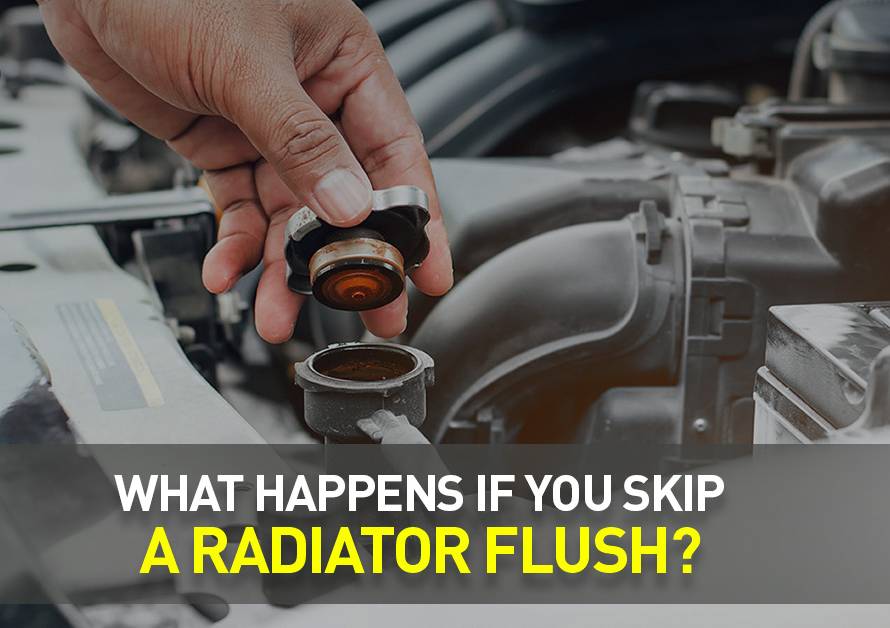
Check the coolant reservoir when the engine is completely cold. The level should sit between the MIN and MAX lines. Also check the colour. Healthy coolant is typically bright green, pink, or orange. Brown, murky, or sludgy coolant that looks contaminated should be flushed and replaced before the trip.
Windshield Washer Fluid
This is the one fluid that most drivers underestimate before a road trip. Mountain highways generate significant road spray and bug splatter, and summer thunderstorms in the foothills can obscure your windshield within seconds. Fill the washer fluid reservoir completely and confirm the spray jets are working on both the driver and passenger sides.
Brake Fluid
Brake fluid absorbs moisture over time, which lowers its boiling point. On sustained mountain descents, hot brake fluid can boil and cause brake fade -a sudden and significant reduction in braking power. Check that your brake fluid is between the MIN and MAX marks in the reservoir and that it is not dark or cloudy, which indicates it has absorbed too much moisture.
Brake fluid should typically be replaced every two years or 40,000 km, regardless of colour. If you cannot remember when it was last changed, a pre-trip brake fluid test costs very little and provides meaningful safety assurance on mountain roads.
6. Test Your Battery Before Your Road Trip to Banff
A weak battery that manages to start your car on a mild Calgary morning may not cope with the additional electrical load of a fully loaded road trip vehicle -air conditioning, phone charging, GPS navigation, and rear-seat entertainment all draw from the same battery.
Battery failure is one of the most common causes of roadside breakdowns on the Calgary to Banff corridor. Also, if your battery is more than three years old, it is worth having it load-tested before your trip, even if it seems to be functioning normally.
Signs Your Battery Needs Attention
Slow engine cranking during startup, dashboard warning lights that appear shortly after starting the car, headlights that dim noticeably when the engine is idling, and a battery that frequently requires a boost are all signs of a battery approaching the end of its service life.
Most batteries have a service life of three to five years in Alberta’s climate. The extreme cold of Calgary winters is particularly hard on batteries, accelerating internal wear. Therefore, a battery that survived its third or fourth winter may not survive a hot summer road trip without warning.
A battery load test at Urban Lube Calgary takes just a few minutes and tells you exactly how much reserve capacity your battery has. Knowing your battery is strong before leaving removes one of the most common causes of mountain road breakdowns.
7. Inspect Belts, Hoses, and Lights
Three often-overlooked components deserve attention before any long highway drive: your serpentine belt, your coolant hoses, and all exterior lights.
Serpentine Belt
The serpentine belt drives your alternator, power steering pump, air conditioning compressor, and water pump. If it fails on the highway, you will rapidly lose multiple vehicle systems simultaneously. Inspect the belt for cracks, fraying, glazing, or missing chunks. Most serpentine belts should be replaced every 100,000 to 160,000 km, but visual wear can appear before that interval.
Coolant Hoses
Squeeze the upper and lower radiator hoses when the engine is completely cold. A healthy hose feels firm and pliable. A hose that feels soft and mushy, has hardened to the point of cracking, or shows visible bulging or swelling near the clamps is at risk of failing. A burst coolant hose on a mountain pass is a serious problem that can cause rapid overheating.
All Exterior Lights
Walk around your vehicle and confirm that all headlights, brake lights, turn signals, and reverse lights are functioning. Also check that your high beams work. Mountain roads can be significantly darker than city streets after sunset, and proper lighting is both a safety and legal requirement. Replacing a burnt bulb before your trip takes minutes and costs very little.
8. Build a Road Trip Emergency Kit
Even a perfectly maintained vehicle can encounter an unexpected situation on a long drive. A well-prepared emergency kit ensures you can handle minor issues yourself and stay safe while waiting for help if something more serious occurs.
Your road trip emergency kit should include jumper cables or a portable jump starter, a basic first aid kit, a flashlight with fresh batteries, a reflective safety vest and road flares or triangle reflectors, a tire pressure gauge, a basic tire repair kit or a can of tire inflator, a tow strap, a blanket (especially important in shoulder season mountain driving), bottled water and a small supply of non-perishable snacks, and a printed copy of your route and emergency contacts in case your phone loses service.
Cell service drops off inside Banff National Park, particularly between Canmore and Lake Louise. Therefore, downloading an offline map of the route before departure is strongly recommended. Also, let someone at home know your planned route and expected arrival time.
In an emergency on a mountain road, pull completely off the road surface, turn on your hazard lights, and stay in the vehicle if possible. In Banff National Park, be aware that wildlife including elk, deer, and bears are present near roadsides at all times.
9. Pre-Road Trip Vehicle Checklist at a Glance
Use this checklist in the days before your departure. Check each item yourself or bring your vehicle to Urban Lube Calgary for a professional pre-trip inspection that covers all of the above in a single visit.
| ✓ | Check Item | What to Look For | Priority |
| ☐ | Engine Oil | Level between MIN/MAX; colour not black | Critical |
| ☐ | Tire Pressure | Match PSI on door jamb sticker | Critical |
| ☐ | Tire Tread Depth | At least 4/32″ remaining; no cracks | Critical |
| ☐ | Brake Pads & Rotors | At least 3mm pad thickness; no grinding | Critical |
| ☐ | Coolant Level | Between MIN/MAX; not brown or sludgy | Critical |
| ☐ | Battery | No corrosion; strong cold-crank test | High |
| ☐ | Windshield Washer Fluid | Full reservoir; working spray jets | High |
| ☐ | Brake Fluid | Between MIN/MAX; not dark or cloudy | High |
| ☐ | Windshield Wipers | No smearing or chattering; good contact | Medium |
| ☐ | All Exterior Lights | Headlights, brake lights, signals working | Medium |
| ☐ | Air Filter | Not clogged with dust or debris | Medium |
| ☐ | Belts (Serpentine) | No cracking, fraying, or visible wear | Medium |
| ☐ | Hoses (Coolant/Radiator) | No soft spots, bulges, or cracks | Medium |
| ☐ | Emergency Kit | Jumper cables, first aid, flashlight, etc. | Standard |
| ☐ | Spare Tire | Properly inflated and accessible | Standard |
Complete this checklist 3 to 5 days before your planned departure date. This gives you enough time to address anything that needs repair -new brake pads, a replacement battery, or a tire swap -without delaying your trip.
10. Get Your Vehicle Ready at Urban Lube Calgary Before You Go
At Urban Lube Calgary, we make pre-road trip vehicle preparation fast, thorough, and straightforward. Our experienced technicians perform comprehensive vehicle inspections that cover all the critical systems you need to check before a road trip to Banff -oil, tires, brakes, fluids, battery, belts, hoses, and lights.
We will give you an honest assessment of your vehicle’s condition, a clear picture of what needs attention before you leave, and what can safely wait until you return. No unnecessary upsells, no pressure -just the information you need to make a confident decision about your vehicle.
Whether you need a quick oil change, a brake inspection, a battery test, or a complete pre-trip service, Urban Lube Calgary gets you in and out quickly so you can focus on planning the adventure ahead.
Book Your Pre-Road Trip Vehicle Check at Urban Lube Calgary
Visit urbanlube.ca or stop by our Calgary shop at 920 28 St NE to book your service today.
Not sure where to start with your pre-trip vehicle check? Visit Urban Lube Calgary and our team will run through the full checklist with you. One visit, everything covered, so you can drive to Banff with total confidence.
Frequently Asked Questions: Road Trip to Banff Vehicle Maintenance
What vehicle checks should I do before a road trip to Banff?
Before a road trip to Banff from Calgary, check your engine oil level and condition, tire pressure and tread depth, brake pad thickness, coolant level, battery condition, windshield washer fluid, windshield wipers, all exterior lights, and serpentine belts and hoses. Also pack a road trip emergency kit.
Do I need winter tires for the Calgary to Banff drive?
From October 1 to April 30, winter tires are mandatory on mountain highways in Alberta, including the Trans-Canada through the Bow Valley. Outside of this period, all-season tires are acceptable, but check road conditions at 511.alberta.ca before departure in shoulder season.
How long is the drive from Calgary to Banff?
The drive from Calgary to Banff is approximately 128 km along the Trans-Canada Highway and takes roughly 90 minutes under normal conditions. The Bow Valley Parkway route takes slightly longer but offers a more scenic, wildlife-friendly drive at 60 km/h.
Can I get a pre-road trip vehicle inspection in Calgary?
Yes. Urban Lube Calgary offers comprehensive pre-trip vehicle inspections covering oil, tires, brakes, fluids, battery, lights, belts, and hoses. No appointment is necessary. Visit urbanlube.ca to learn more.
Is there a gas station between Calgary and Banff?
Yes, there are gas stations in Canmore, which is about 100 km west of Calgary and 25 km before Banff townsite. However, Parks Canada recommends filling your tank fully before entering the national park, as fuel prices inside the park are typically higher.